How to Choose Industrial Racking in 2026?
Choosing Industrial Racking in 2026 requires more than comparing prices, beam lengths, and advertised load capacities. Warehouses now face faster order cycles, denser inventory, labor shortages, and changing product sizes. The MHI 2025 Annual Industry Report indicates that supply-chain leaders continue increasing investment in technology and operational resilience. That trend affects racking decisions directly. A rack must support people, forklifts, automation, and future layout changes.
The Rack Manufacturers Institute’s technical guidance stresses that capacity depends on the complete system, including frames, beams, connections, flooring, and installation quality. John Nofsinger, a former RMI executive director, expressed the principle clearly: “A rack is a structural system, not a piece of furniture.” It sounds simple. It is not always practiced. The 2024 Warehousing Vision Study by Zebra Technologies also reported persistent pressure to improve warehouse visibility, accuracy, and productivity. Therefore, aisle width, barcode access, picking height, and compatibility with automated equipment deserve careful review.
A practical selection process should begin with real operating data. Measure pallet weights, dimensions, daily movements, forklift turning space, ceiling height, and planned growth. Then compare selective pallet racking, drive-in systems, push-back designs, carton flow, and mobile storage. The right solution may not be the densest one. Higher density can reduce travel distance, but it may slow access or increase handling risks. This is where many buying guides oversimplify the decision. A system that looks efficient on paper may perform poorly beside a busy loading door. The best choice is usually the one that remains safe, adaptable, inspectable, and financially sensible as warehouse conditions change.
What Industrial Racking Is and Where It Is Used
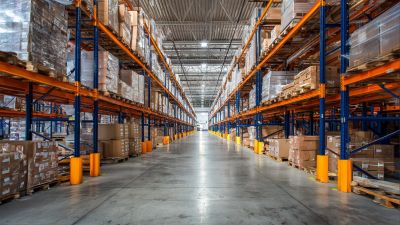
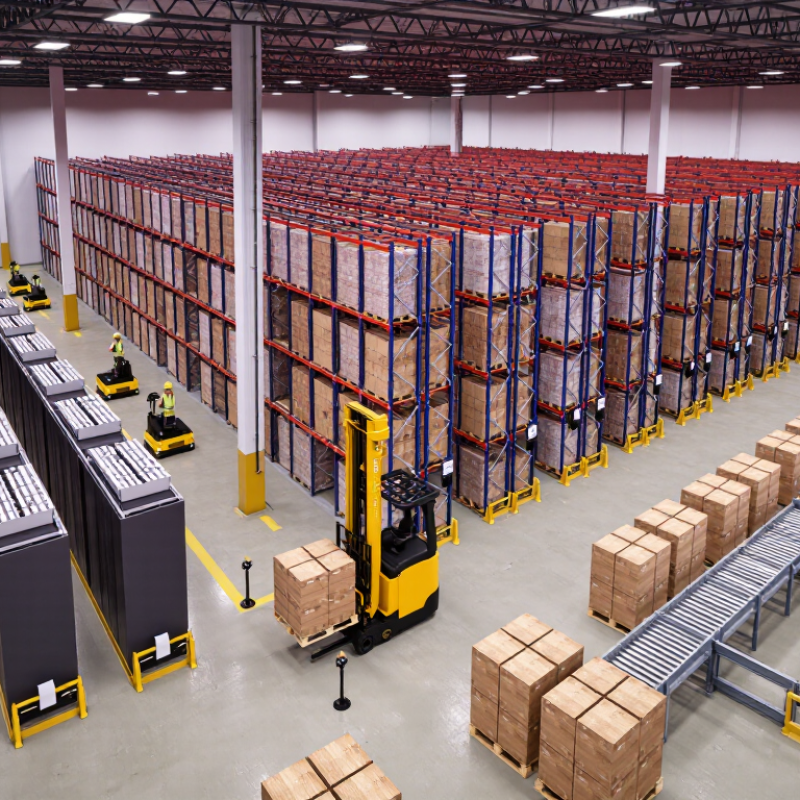
Industrial racking is an engineered steel storage system for pallets, cartons, containers, or long materials. It creates vertical storage while keeping handling routes accessible. Common forms include selective pallet racking, drive-in systems, cantilever racks, and boltless shelving. Each suits a different product profile.
Its use extends beyond warehouses. Manufacturing plants store raw materials near production lines. Distribution centers use pallet racks for fast picking and replenishment. Cold-storage facilities need corrosion-resistant finishes and clearance for airflow. Workshops often use cantilever racks for pipes, timber, and metal sections. In practice, rack depth, beam height, aisle width, and forklift turning space matter together. A taller rack is not automatically better.
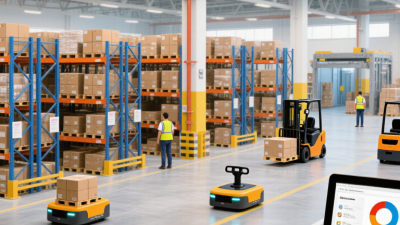
The 2024 State of Logistics Report placed U.S. business logistics costs at about $2.3 trillion, equal to 8.7% of GDP. That pressure makes usable cubic space valuable. MHI’s 2024 Annual Industry Report also found that 55% of supply-chain leaders expected higher technology and innovation investment. Racking must therefore support scanners, conveyors, and changing inventory patterns. Load plaques, floor condition, impact protection, and regular inspections remain essential. OSHA guidance stresses stable storage and clear aisles. Small oversights become expensive. I would still recheck every capacity calculation after layout changes, because real warehouses rarely stay perfectly orderly.
How to Assess Storage Needs, Load Types, and Available Space
Choosing industrial racking in 2026 starts with a measured storage profile, not a catalog image. I begin by recording SKU count, pallet dimensions, turnover, picking frequency, and seasonal peaks. A warehouse holding 800 pallets needs a different layout from one storing 300 bulky cartons. Measure actual units, including damaged or irregular packaging. Small errors multiply quickly. I once planned from nominal pallet dimensions and lost usable aisle space after wrapping was added. That mistake was avoidable.
Classify every load by weight, shape, stability, and handling method. Note whether forklifts, reach trucks, or manual picking will access each level. A 900-kilogram pallet demands more than a rated beam; its load distribution and placement also matter. Keep heavier goods low, and check pallet condition before loading. Record the heaviest realistic case, not the average. Qualified engineers should verify frame capacity, floor loading, anchoring, and impact protection. Ratings must match the complete configuration.
Space assessment should include clear height, column positions, doors, lighting, sprinklers, exits, and travel paths. Draw the floor to scale before selecting bay widths or aisle clearances. Leave room for turning, inspection, repairs, and future volume changes. A dense design can look efficient yet slow every pick. I prefer testing one representative aisle with actual equipment before approving the full installation. It costs time, but assumptions often fail on the warehouse floor. Recheck measurements after construction changes; a relocated light or safety barrier can reduce practical capacity.
How to Compare Racking Systems for Different Warehouse Operations
How to Choose Industrial Racking in 2026?
How to Compare Racking Systems for Different Warehouse Operations
Choosing industrial racking starts with the work, not the steel. A fast-moving pallet warehouse needs wide, direct access and simple replenishment. A facility storing thousands of small parts may need adjustable shelving and shorter picking distances. Measure the operation before comparing products.
I have seen teams select dense storage, then struggle with slow retrieval during peak shifts. Pallet flow systems can support high turnover, while selective racks offer easier access to varied loads. Drive-in layouts increase density, but they reduce immediate access to individual pallets. Cantilever racks suit long materials, such as pipes or timber. Every option trades one advantage for another.
Compare rated capacity, aisle width, lift-truck clearance, and future expansion space. Check the actual pallet size, load weight, and beam level spacing. A rack drawing may look efficient, yet leave poor visibility at the picking face. Safety features matter too, including column protection, load labels, and routine inspection records. Ask an experienced engineer to verify the floor, anchors, and loading assumptions. Do not rely on appearance.
I once underestimated seasonal inventory. The layout worked in spring, but became crowded before winter. That mistake changed how I review capacity. Leave room for growth, but avoid paying for empty locations. Test the proposed workflow with real travel times and operator feedback. Data helps. It does not replace observation.
How to Select Materials, Dimensions, Safety Features, and Accessories
Industrial racking should match the materials, dimensions, working conditions, and handling equipment in your facility.
Steel is usually suitable for heavy loads and daily forklift traffic. Galvanized finishes perform better in damp areas, while powder-coated surfaces suit cleaner, drier warehouses. Check the declared load capacity for every beam and upright.
Never estimate it from appearance.
Measure the pallet size, load height, aisle width, and available ceiling clearance before selecting a frame. Allow space for forklift turning and sprinkler access.
Small errors matter.
Confirm the floor slab can support concentrated loads, especially in older buildings. Adjustable beams help, but excessive adjustment can reduce usable storage space.
I have seen layouts that looked efficient on paper but slowed every picking movement.
Safety features deserve practical attention.
Use upright guards, rack-end barriers, locking pins, load plaques, and back mesh where falling goods could reach people. Add wire decking or pallet supports when loads are unstable or pallets are damaged.
Separators can keep cartons from sliding between beams. Inspect connections after installation and after any impact.
A perfect calculation is rare, so review real traffic patterns, product weight changes, and worker visibility.
Sometimes, a simpler rack is safer.