
What Are the Top Types of Pallet Racking?

Choosing the right Pallet Racking system affects storage density, picking speed, safety, and future expansion. A rack may look like a simple steel structure. It is not. Beam height, aisle width, pallet dimensions, forklift turning radius, load weight, and floor condition all influence performance. In a busy warehouse, a few extra seconds per pallet can become hours each week.

Industry guidance supports a careful, evidence-based approach. The Rack Manufacturers Institute’s ANSI MH16.1 standard provides design requirements for steel storage racks, including structural capacity and seismic considerations. OSHA 29 CFR 1910.176 also requires stored materials to remain stable and secure against sliding or collapse. Meanwhile, the 2024 MHI Annual Industry Report highlights continued investment in automation, inventory visibility, and warehouse technology. That trend matters because modern racking increasingly works alongside conveyors, scanners, mobile robots, and warehouse management systems. However, technology cannot correct a poorly planned layout.

This guide examines the top types of Pallet Racking, including selective, drive-in, push-back, pallet flow, and cantilever systems. Each design solves a different problem. Selective racking offers direct access, while drive-in racking prioritizes density. Pallet flow supports controlled first-in, first-out movement. The best choice depends on product rotation, available space, handling equipment, and safety requirements. There is no universal winner. Even experienced planners can miss changing SKU profiles or seasonal demand. Reviewing real operating data, inspecting existing damage, and consulting a qualified rack designer remain essential steps.
What Are the Top Types of Pallet Racking?

What Is Pallet Racking and How Does It Work?

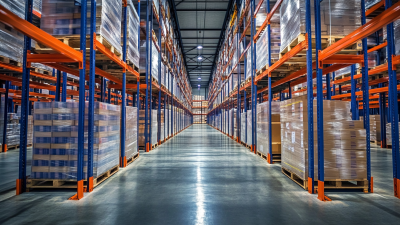
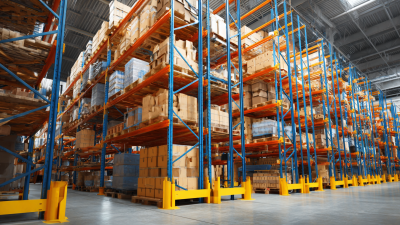
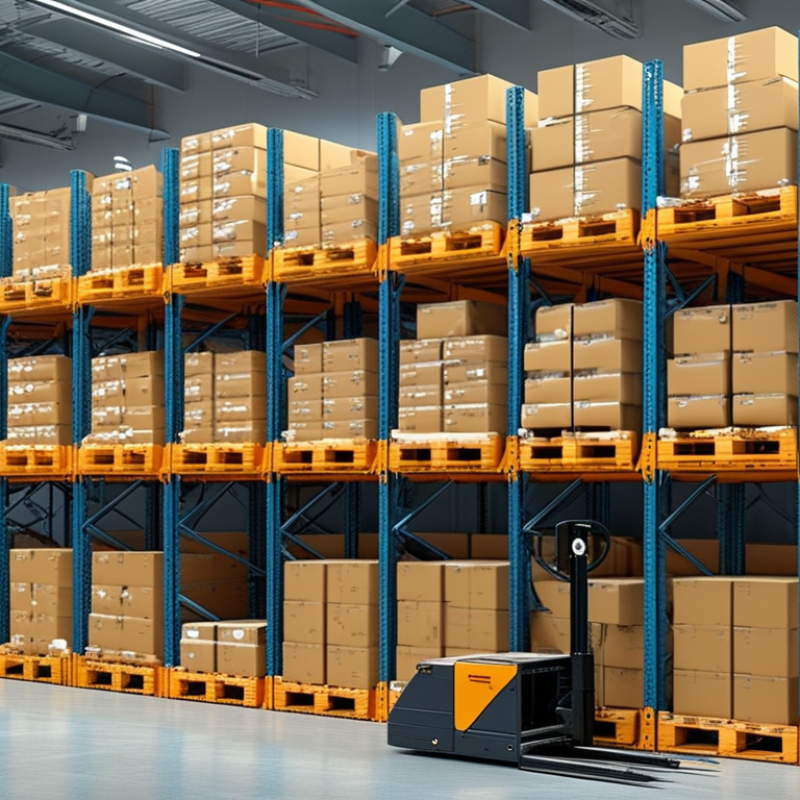
Pallet racking is a steel storage system designed to hold palletized goods above the warehouse floor. It uses upright frames, horizontal beams, and pallet supports. Forklifts place pallets into these open levels and retrieve them when orders arrive. The structure transfers weight downward through the frames, while floor anchors help resist movement. Clear aisle width matters because a small measurement error can slow every lift. Before installation, managers should verify pallet dimensions, rack capacity, floor strength, and forklift clearance.

Selective pallet racking gives direct access to every pallet, making it practical for varied inventory. Drive-in racking stores pallets deeply and suits large quantities of similar products.

Push-back systems use nested carts, so loading and unloading happen from one aisle. Pallet-flow racking uses gravity rollers to move goods toward the picking face.

Cantilever racking works better for long items, such as pipes or timber. Each design changes storage density, access speed, and handling risk.

In daily warehouse work, damage checks are essential. Inspectors should look for bent uprights, loose beams, missing safety pins, and scraped columns. A damaged rack can appear stable.

It may not be.

Operators also need visible load notices and consistent pallet placement. Even a well-designed system can fail when pallets are overloaded, uneven, or pushed beyond the beam line.

Layout reviews should consider traffic patterns, emergency access, and future inventory changes. That last point is often underestimated. A rack layout that works today may restrict tomorrow’s operations.

What Are the Main Types of Pallet Racking?

Pallet racking comes in several practical forms, and each suits a different warehouse rhythm. Selective pallet racking offers direct access to every load. It works well when inventory changes often. Its adjustable beams also support different pallet heights. Drive-in racking stores many identical products in limited floor space. Forklifts enter the lanes, so operators need strong traffic discipline. This design usually supports last-in, first-out handling.

Push-back racking uses nested carts on inclined rails. It increases storage density while keeping several product positions accessible. Pallet flow racking uses rollers and gravity. It supports first-in, first-out rotation, making it useful for dated goods. Cantilever racking serves long items, such as pipes, timber, and metal sections. It has open arms instead of standard pallet beams. In real warehouse assessments, I have seen small clearance errors create daily delays. No layout is perfect. Product variety can change quickly.

Tips: Confirm pallet dimensions, load weights, and forklift reach before choosing a system. Keep clear aisle widths around turning points. Inspect beams, frames, locks, and floor anchors regularly. Damaged components need prompt isolation and professional assessment. Labels should remain visible from normal operating positions. Do not rely only on maximum height. Ceiling sprinklers, lighting, fire access, and building capacity also influence the design. A simple site measurement often reveals more than a catalogue diagram. Recheck the plan after peak-season changes. That step is easy to skip.

How Do Different Pallet Racking Systems Compare?

What Are the Top Types of Pallet Racking?

How Do Different Pallet Racking Systems Compare?

Selective pallet racking offers the easiest pallet access. Every load usually has a direct aisle position. It suits mixed stock and frequent picking, but it consumes more floor space. Double-deep racking stores two pallets behind each other. It improves density, although forklifts need suitable reach equipment and inventory rotation becomes less flexible.

Drive-in racking can provide high density for uniform products with limited stock-keeping units. It uses fewer aisles, but forklifts enter the structure, increasing impact exposure. Push-back racking stores pallets on inclined carts. It supports several pallets per lane and faster loading. Pallet-flow racking uses rollers and gravity, making first-in, first-out rotation practical. However, rollers need regular inspection and careful pallet selection. The 2024 MHI Annual Industry Report identifies labor availability as a major supply-chain concern, reinforcing the value of systems that reduce travel and handling time. That benefit is not automatic.

Warehouse teams should compare usable capacity, access frequency, pallet weight, and equipment requirements. A 2023 report from the U.S. Census Bureau showed continued growth in warehousing employment, yet labor costs remain a planning concern. High-density storage may reduce aisle travel, but it can slow access to unpopular items. Selective racking is often safer for varied inventories, while flow systems demand stronger operating discipline. A spreadsheet can mislead. Measure turning clearances, beam elevations, floor condition, and sprinkler spacing on site. Load plaques, documented inspections, and trained operators matter as much as the rack layout. The cheapest design is rarely the least expensive one.

Which Factors Determine the Right Racking Type?

Choosing the right pallet racking begins with the warehouse operation, not the rack appearance. Selective racking suits many SKUs and frequent access. Drive-in racking stores fewer product varieties in deeper lanes. Push-back systems increase density while allowing several pallets per lane. Pallet-flow racking supports controlled stock rotation, especially when older pallets must move first. Cantilever racking handles long materials better than standard pallet systems.

Product movement is a major deciding factor. Count the number of SKUs, daily pallet entries, and average storage time. A fast-moving warehouse may need direct access to every pallet. A slower operation may accept higher density and fewer access points. Decide whether stock should follow FIFO or LIFO. Small differences matter.

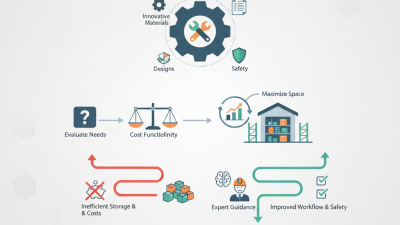
Measure pallet length, width, height, and weight carefully. Check ceiling height, floor condition, aisle width, and sprinkler clearances. Material-handling equipment also influences the design. Narrow aisles may save space, but they can require specialized trucks and tighter driving control. Budget matters, yet future growth matters more. A cheap layout can become expensive after six months. In warehouse assessments, teams sometimes trust current inventory too much. That is a weakness. Review seasonal peaks, damaged pallets, and expansion plans before selecting a system. Qualified professionals should verify load capacities, anchoring, inspections, and local safety requirements. neat drawings are not enough.

What Are the Top Types of Pallet Racking? - Which Factors Determine the Right Racking Type?

Racking Type Typical Storage Method Inventory Selectivity Space-Density Potential Stock Rotation Typical Equipment Best-Suited Applications Key Advantages Main Limitations Important Selection Factors
Selective Pallet Racking Each pallet position is directly accessible from an aisle. ★★★★★
Very high
★★★☆☆
Moderate
FIFO or LIFO, depending on operating practice Counterbalance or reach trucks Warehouses with many stock-keeping units and frequent picking activity Easy access, simple stock control, flexible beam adjustment, and relatively straightforward installation Requires more aisle space than high-density systems and may provide lower storage density SKU variety, access frequency, pallet dimensions, ceiling height, aisle width, and budget
Double-Deep Pallet Racking Two pallet rows are placed one behind the other, usually accessed from the front. ★★★☆☆
Moderate
★★★★☆
High
Usually LIFO; FIFO requires careful operating control Reach trucks with suitable reach capacity Operations storing multiple pallets of the same or similar products Increases pallet density while retaining access to a substantial number of product groups Reduced direct access to rear pallets and possible inventory management complications Number of pallets per SKU, truck reach capability, load depth, fire protection, and inventory rotation policy
Drive-In Racking Forklifts drive into rack lanes to load and retrieve pallets stored on support rails. ★☆☆☆☆
Low
★★★★★
Very high
Primarily LIFO Counterbalance or reach trucks with controlled operating procedures Cold storage and operations holding large quantities of limited product lines Uses floor area efficiently by reducing aisles and creating deep storage lanes Limited selectivity, greater risk of rack impact, and less suitable for frequent SKU changes SKU concentration, pallet quality, loading discipline, forklift clearance, safety controls, and turnover rate
Drive-Through Racking Forklifts can enter the rack from both sides, allowing loading from one side and retrieval from the other. ★★☆☆☆
Low to moderate
★★★★★
Very high
Supports FIFO when loading and retrieval are managed from opposite sides Counterbalance or reach trucks High-volume products requiring dense storage and controlled stock rotation High storage density with better rotation potential than drive-in layouts Requires access on both sides and may involve higher layout and installation costs Building access, product flow, loading sequence, pallet consistency, fire-code requirements, and available depth
Pallet Flow Racking Pallets move by gravity along inclined rollers from the loading side to the picking side. ★★★☆☆
Moderate
★★★★☆
High
FIFO Forklifts or reach trucks for replenishment and retrieval Perishable goods, date-sensitive inventory, and high-throughput distribution operations Provides controlled FIFO rotation, reduces travel distance, and separates loading from picking Higher initial cost, more mechanical components, and stricter pallet quality requirements Product shelf life, pallet dimensions, roller load rating, lane length, replenishment frequency, and maintenance capability
Pallet Shuttle Racking A motorized shuttle moves pallets within deep storage lanes while operators control the system remotely. ★★★☆☆
Moderate
★★★★★
Very high
FIFO or LIFO, depending on lane configuration and operating sequence Forklifts plus battery-powered shuttle equipment High-volume, high-density storage with repetitive pallet movements Reduces forklift travel inside lanes, improves operator safety, and uses storage space efficiently Higher capital cost, dependence on batteries and controls, and less economical for low-volume operations Throughput, number of pallets per SKU, battery management, temperature conditions, maintenance, and return on investment
Push-Back Racking Pallets are loaded and retrieved from the same aisle; each new pallet pushes the previous pallet deeper into the lane. ★★★☆☆
Moderate
★★★★☆
High
Generally LIFO Reach trucks or counterbalance trucks, depending on layout Medium-turnover products requiring multiple pallets per SKU Improves density compared with selective racking and requires fewer aisles than single-depth storage Not ideal for strict FIFO and may make individual pallet access less direct Turnover requirements, pallet weight, lane depth, product grouping, aisle width, and loading sequence
Mobile Pallet Racking Rack rows are mounted on powered mobile bases that open an aisle only where access is required. ★★★★★
Very high
★★★★☆
High
FIFO or LIFO, depending on operating practice Forklifts or reach trucks; powered rack controls are also required Facilities where floor space is limited and direct access to many SKUs remains important Combines high floor utilization with direct access to stored pallet positions Higher cost, slower access when rows must be moved, and dependence on electrical and safety systems Floor loading, seismic conditions, power supply, access frequency, emergency egress, and budget
Very Narrow Aisle Racking Selective or double-deep racks are arranged in narrow aisles operated by specialized trucks. ★★★★★
Very high
★★★★☆
High
FIFO or LIFO, depending on rack layout and operating practice Very-narrow-aisle turret trucks or articulated forklifts High-bay warehouses needing many accessible pallet positions Improves storage capacity and can use building height while maintaining strong selectivity Requires specialized equipment, accurate floor conditions, and trained operators Building height, floor flatness, truck investment, guidance systems, pallet dimensions, and throughput
Automated Storage and Retrieval System Automated cranes, shuttles, or robotic vehicles store and retrieve pallets under software control. ★★★★☆
High
★★★★★
Very high
FIFO or LIFO, configured through the control system Storage cranes, pallet shuttles, conveyors, sensors, and warehouse control software Large-scale operations with consistent processes, high throughput, or labor constraints High space utilization, accurate inventory tracking, reduced manual travel, and consistent handling High capital cost, complex integration, and greater reliance on software, controls, and maintenance Throughput, system uptime, integration requirements, pallet standardization, building design, labor costs, and payback period

How Can Pallet Racking Be Used Safely and Efficiently?

Pallet racking becomes safer when the system matches the warehouse task. Selective racking offers direct access to every pallet. Drive-in systems improve density but reduce access and require disciplined forklift control. Push-back and pallet-flow designs support faster turnover, yet their rails and rollers need careful inspection. The right choice depends on load weight, pallet condition, aisle width, and rotation frequency.

Safe operation starts with accurate load data. Each bay should display its maximum capacity clearly. Operators must never place damaged pallets on elevated beams. Forklift drivers should approach slowly, center loads, and avoid turning beneath raised pallets. Keep aisles clear. OSHA identifies struck-by incidents and falling materials as major warehouse hazards in its Warehousing Safety guidance. A practical detail matters here: painted floor lines can fade, so supervisors should check them during routine walks.

Inspection must be measurable, not informal. The UK Health and Safety Executive’s HSG76 guidance recommends detailed rack examinations at intervals not exceeding 12 months. It also supports regular visual checks and immediate reporting of damage. Red, amber, and green tagging can help teams act quickly, but tags alone cannot repair bent uprights. Damage changes everything. In practice, workers may overlook a slightly twisted frame because production feels urgent. That is a weakness worth admitting. Record the location, isolate unsafe bays, and arrange competent repairs before reuse. Review incident trends monthly, then adjust aisle layouts, training, or rack protection based on evidence.