2026 Best Activated Carbon Filter Sheet for Global Buyers

Global buyers are entering 2026 with higher expectations for filtration performance, traceability, and material consistency. An activated carbon filter sheet must do more than appear dark and dense. It should match the target contaminant, airflow rate, humidity, contact time, and equipment design.

Dr. James E. Crittenden, a respected water-treatment researcher and co-author, states, “Adsorption is the accumulation of a substance at the interface between two phases.” This principle explains why carbon source and pore structure matter. Coconut-shell carbon may perform differently from coal-based carbon. Impregnation can improve removal for selected gases, but it may also increase cost and pressure drop.

Real purchasing decisions need measurable evidence. Buyers should examine iodine number, carbon loading, basis weight, thickness, tensile strength, pressure drop, and breakthrough data. Testing under dry laboratory conditions can look impressive. Field humidity may tell another story. Ask for batch records, safety documentation, application data, and relevant certifications before approving a supplier.

There is no universal best sheet.

A strong product for kitchen odor control may fail in industrial ventilation. A thick sheet can hold more carbon, yet restrict airflow. A low-cost option may become expensive after frequent replacement. These trade-offs deserve honest attention. They are often overlooked.

This 2026 guide compares leading activated carbon filter sheet options for international buyers. It focuses on material quality, application fit, supplier reliability, and practical operating value. Specifications remain important, but performance should be judged inside the actual system. That is where assumptions meet evidence.

2026 Best Activated Carbon Filter Sheet for Global Buyers

Activated Carbon Filter Sheet Basics and Working Principles

activated carbon filter sheets combine aporous carbon layer with a fibrous support. Their working principle is adsorption, not simple absorption. Odor molecules and many volatile organic compounds attach to the carbon’s internal pores. Air still passes through the sheet, while contaminants remain on active surfaces.

The U.S. Environmental Protection Agency’s Air Pollution Control Cost Manual reports typical carbon adsorption systems achieving about 95–99% control for suitable VOC streams. Performance varies sharply, however. Humidity can occupy adsorption sites, and excessive airflow reduces contact time.

A 2022 World Health Organization report estimated that 2.3 billion people still cook with polluting fuels, showing why practical air-cleaning materials remain important. Yet carbon sheets are not universal barriers. They perform poorly against particles unless paired with a particle-filter layer.

Tips: Check carbon loading, pressure drop, pore structure, and test conditions before purchasing. A dark sheet is not automatically a high-capacity sheet. Ask for laboratory results using target gases, airflow, humidity, and service-life conditions. The ISO 10121 testing framework can help compare gas-phase filtration performance. Cut edges also matter; careless fitting creates bypass leakage around the sheet. In field use, replace the media before odors return, because smell is an imperfect warning. Some applications need earlier replacement.

Key Performance Metrics for Comparing Filter Sheets in 2026

2026 Best Activated Carbon Filter Sheet for Global Buyers

Key Performance Metrics for Comparing Filter Sheets in 2026

Activated carbon filter sheets should be compared by measured performance, not carbon color or marketing claims. Iodine number indicates micropore activity, while methylene blue adsorption reflects larger-pore performance. Neither metric works alone. Check carbon loading, basis weight, thickness, and adsorption capacity under realistic humidity. A thick sheet may hold more carbon, yet create higher pressure drop. Measure airflow at the intended face velocity, such as 1.0 or 2.0 m/s. Record initial pressure drop and its increase during loading. Tensile strength, edge stability, and dust shedding also matter during cutting and installation.

Tips: Request independent test data. Compare results using the same airflow, humidity, contaminant level, and test duration. Inspect samples after flexing, not only when new. Ask for batch traceability and safety documentation.

Field experience often exposes gaps in laboratory figures. A sheet can perform well in dry testing but lose efficiency in humid rooms. Uneven carbon distribution may create weak zones. Seal quality can matter as much as adsorption capacity. Buyers should test full-size panels, because small coupons may hide airflow bypass. One practical weakness remains: many comparisons report removal efficiency without showing service life. That number can mislead procurement teams. A better review combines capacity, pressure drop, mechanical durability, and repeatable quality records. Recheck these values before every major order.

Material Types, Structures, and Suitable Filtration Applications

2026 Best Activated Carbon Filter Sheet for Global Buyers

Material choice controls adsorption, strength, and air resistance. Coconut-shell carbon usually offers fine pores for light gases and odors. Coal-based carbon provides broader pore distribution and stronger mechanical stability. Wood-based carbon contains larger pores, which can support heavier organic molecules. The binder and carrier matter too. Cellulose feels light, while polyester supports humid or demanding airflow conditions. In practical testing, carbon loading alone never tells the full story.

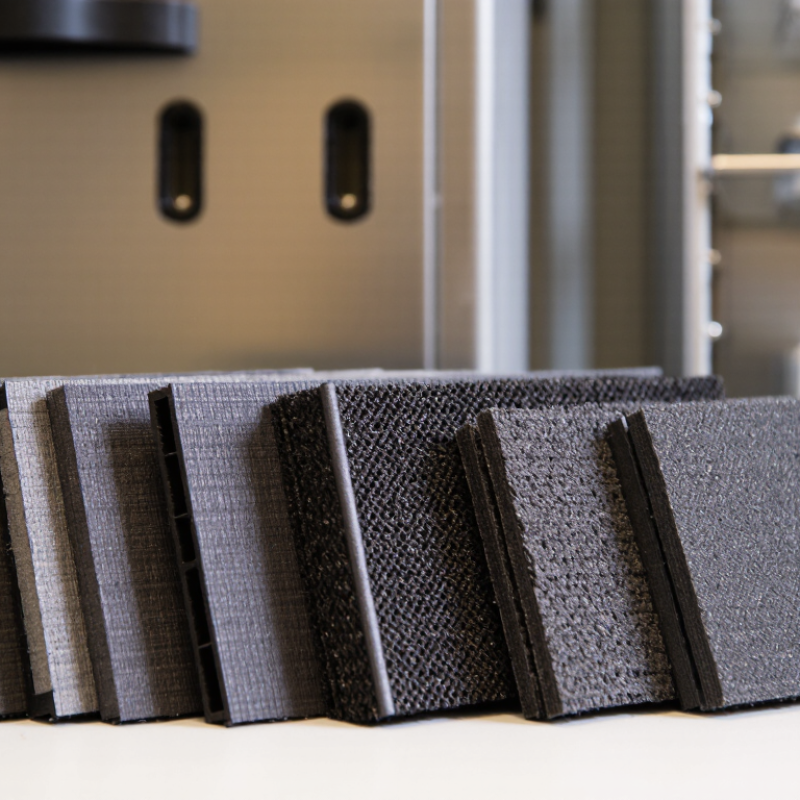
Structure should match the filtration task. Flat sheets suit cabinet filters, vent panels, and simple odor-control modules. Pleated sheets increase surface area without greatly enlarging the frame. Layered sheets can combine dust capture with gas adsorption. A composite design may include a prefilter, carbon layer, and protective backing. This arrangement reduces premature clogging. Fit matters. A loose edge can let untreated air bypass the carbon.

For global purchasing, request carbon weight, thickness, pressure drop, humidity performance, and target contaminant data. Ask for test conditions, not only removal percentages. Gas concentration, airflow, contact time, and temperature can change results sharply. For HVAC odor control, balance adsorption capacity against fan energy. For kitchen exhaust, select a stronger structure with suitable grease protection. For water-related applications, verify wet strength and extractables before use. A higher carbon weight is not automatically better. Some sheets lose efficiency quickly when dust loading is ignored. That weakness deserves honest review.

2026 Best Activated Carbon Filter Sheet for Global Buyers - Material Types, Structures, and Suitable Filtration Applications
Filter Sheet Type Activated Carbon Material Media Structure Typical Thickness Typical Carbon Loading Typical Iodine Number of Carbon Main Filtration Strength Suitable Applications Important Selection Considerations
Coconut-Shell Carbon Nonwoven Sheet Steam-activated coconut-shell granular or powdered carbon Carbon particles bonded or laminated into a synthetic nonwoven support 2–8 mm 150–500 g/m² 900–1,400 mg/g High microporosity and strong adsorption of many low-molecular-weight volatile organic compounds Indoor air treatment Odor control Respiratory cartridges Small air purifiers Choose a thicker or multilayer structure when longer contact time and higher adsorption capacity are required.
Bituminous-Coal Carbon Filter Paper Coal-based activated carbon, commonly granular or powdered Carbon-loaded cellulose, synthetic fiber, or composite filter paper 0.5–3 mm 80–300 g/m² 700–1,100 mg/g Balanced micro- and mesoporosity for broad gas-phase adsorption HVAC prefilters Cabin air filtration General odor removal Industrial ventilation Suitable for general-purpose filtration; verify dust-release resistance and binder compatibility before pleating.
Wood-Based Carbon Sheet Wood-derived activated carbon, usually with a relatively high mesopore volume Powdered carbon dispersed in cellulose, melt-blown, or other fibrous media 1–6 mm 100–400 g/m² 600–1,200 mg/g Good adsorption of larger organic molecules and many odor compounds Food odor control Wastewater polishing Large-molecule VOC treatment Air freshening media Mesoporous grades can be advantageous for larger molecules, but actual performance depends on humidity, airflow, and carbon activation.
Activated-Carbon Impregnated Filter Sheet Activated carbon treated with selected chemicals such as alkaline, acidic, or metal-salt impregnants Impregnated carbon fixed to nonwoven, paper, foam, or molded support 2–10 mm 150–700 g/m² Not directly comparable with untreated carbon Enhanced chemisorption for selected acidic gases, alkaline gases, or reactive contaminants Ammonia control Acid-gas control Specialty industrial air Emergency-response filtration Confirm target contaminant, impregnant chemistry, service temperature, moisture resistance, and disposal requirements.
Activated-Carbon Laminated Nonwoven Granular activated carbon sandwiched between two fiber layers Two-sided nonwoven laminate with a controlled carbon bed 3–12 mm 250–900 g/m² 800–1,200 mg/g Higher carbon inventory than thin coated media while retaining flexible sheet processing Pleated air filters Room air cleaners Automotive air systems Odor-control panels Check edge sealing, carbon migration, pleat stability, and pressure drop at the intended airflow rate.
Carbon-Coated Filter Paper Fine powdered activated carbon applied to cellulose or synthetic filter paper Thin surface-coated or partially impregnated fiber matrix 0.2–1.5 mm 30–180 g/m² 700–1,200 mg/g Low-profile odor adsorption with good cutting and converting efficiency Mask inserts Light-duty air filters Packaging inserts Small appliance filters Best for limited contaminant loads; test for carbon shedding, moisture sensitivity, and coating uniformity.
Activated-Carbon Foam Sheet Carbonized and activated polymer foam or carbon particles integrated into open-cell foam Three-dimensional open-cell structure with interconnected flow channels 5–25 mm 300–1,500 g/m² 600–1,100 mg/g Low airflow resistance and comparatively high carbon volume per unit area Ventilation grilles Solvent-vapor control Equipment enclosures Reusable filter modules Consider compression recovery, flammability rating, foam chemical compatibility, and cleanability.
Honeycomb Activated-Carbon Module Sheet Activated carbon coated onto or formed around a rigid honeycomb substrate Parallel channels that provide a large geometric surface area and low flow resistance 10–50 mm Usually specified by carbon mass per module rather than g/m² Typically 700–1,200 mg/g Low pressure drop and controlled airflow through deep adsorption channels Large air-handling units Commercial odor control Industrial exhaust VOC polishing Use where a rigid format and predictable airflow are more important than flexible sheet conversion.
Carbon and Particulate Composite Sheet Activated carbon combined with synthetic fibers, melt-blown fibers, or fine particulate media Multilayer structure combining particulate capture and gas adsorption 2–10 mm 100–600 g/m² 700–1,300 mg/g Simultaneous removal of airborne particles and selected odors or VOCs Air purifier filters HVAC filtration Vehicle cabin filters Cleanroom prefiltration Evaluate particulate efficiency and gas adsorption separately; a high particle rating does not automatically indicate high gas capacity.
Buyer note: The values shown are typical engineering ranges for comparison, not guaranteed specifications. Actual performance depends on carbon pore structure, carbon loading, binder, sheet thickness, relative humidity, airflow, contaminant concentration, temperature, and required service life. For procurement, request test data for pressure drop, adsorption capacity, carbon shedding, flammability, and target-contaminant breakthrough time.

How Global Buyers Should Evaluate Suppliers and Product Quality

2026 Best Activated Carbon Filter Sheet for Global Buyers
How Global Buyers Should Evaluate Suppliers and Product Quality

A reliable filter sheet starts with verified carbon, not attractive packaging. Ask for the carbon source, activation method, carbon loading, thickness, and batch number. ASTM D4607 iodine testing can indicate adsorption capacity, but it cannot predict every household pollutant. Request independent laboratory results for VOC removal, pressure drop, moisture, ash, and extractables. Small details matter.

The U.S. Environmental Protection Agency reports that indoor VOC levels can be two to five times higher than outdoor levels, and sometimes much higher. This supports carbon filtration, but only when airflow remains stable. A dense sheet may adsorb more chemicals while restricting ventilation. Compare pressure drop at the actual operating airflow, not at an easy laboratory setting. Ask suppliers for test conditions in writing.

The World Health Organization’s 2021 air-quality guideline sets annual PM2.5 exposure at 5 µg/m³. Activated carbon does not replace a proper particle filter. A credible supplier should explain this boundary clearly. Look for ISO 9001 records, traceable production data, accelerated aging results, and storage guidance. For water applications, review the U.S. EPA Drinking Water Treatability Database and check contaminant-specific evidence. Do not accept one iodine number as proof of universal performance. I have seen technically impressive samples fail after humid storage. That weakness deserves attention. Supplier audits, sealed packaging, and repeat testing can reveal it before shipment.

Purchasing, Compliance, Cost, and Shipping Considerations for 2026

2026 Best Activated Carbon Filter Sheet for Global Buyers

For 2026 purchasing, filter performance should match the application, not only the quoted carbon content. Ask for iodine value, pressure-drop data, adsorption capacity, thickness tolerance, and particle-shedding results. A sheet used near drinking water needs different evidence from one used in industrial air treatment. Request a recent COA, SDS, batch number, and traceable test methods. Compliance documents must reflect the destination market and the final use. Generic certificates are not enough.

Tips: Compare landed cost, not unit price. Include tooling, testing, inland delivery, customs handling, insurance, and possible inspection fees. A low quotation can become expensive after moisture damage or rejected documentation. During shipping, require sealed moisture-resistant packaging, corner protection, pallet details, and clear carton markings. Confirm the HS classification with a qualified customs professional. Rules and duties can change. Do not rely on an old spreadsheet.

In practical sourcing reviews, small details often reveal larger risks. Check whether the supplier controls carbon uniformity across the sheet, rather than testing only one sample. Ask how production changes are communicated. Some buyers overlook storage conditions; humid warehouses can affect performance before installation. I have found that delivery schedules are rarely perfect, so maintain a reasonable buffer. The “best” sheet may cost more initially, yet inconsistent thickness can create higher replacement and labor costs. A final pre-shipment sample is useful, but it cannot replace ongoing batch verification.